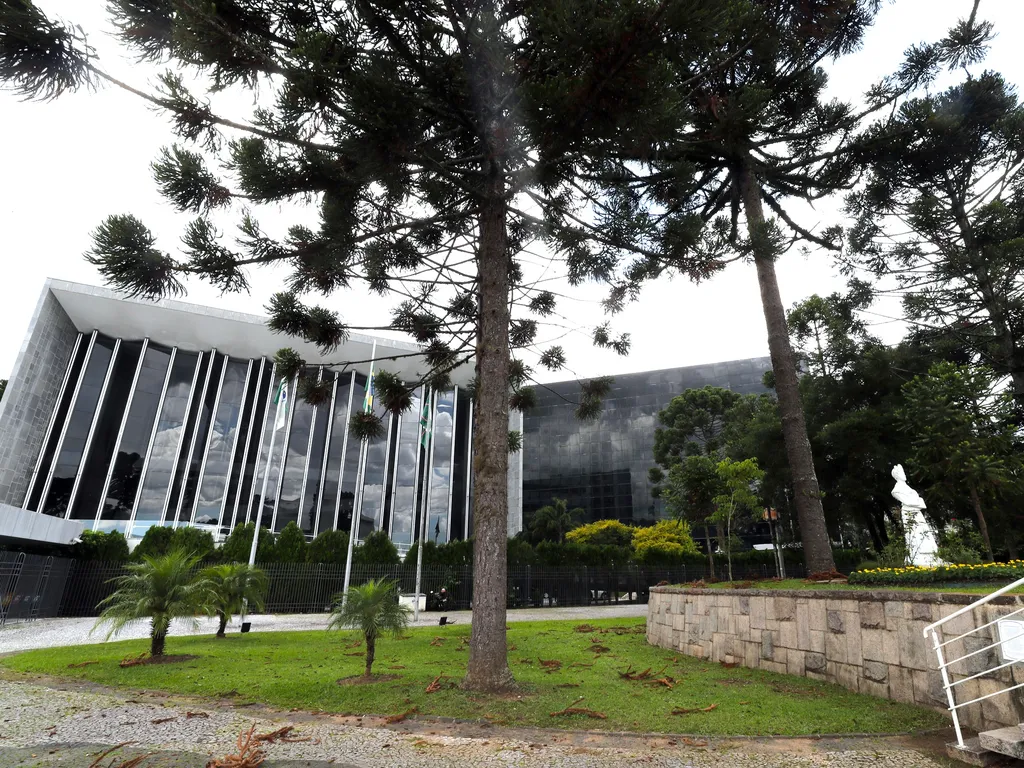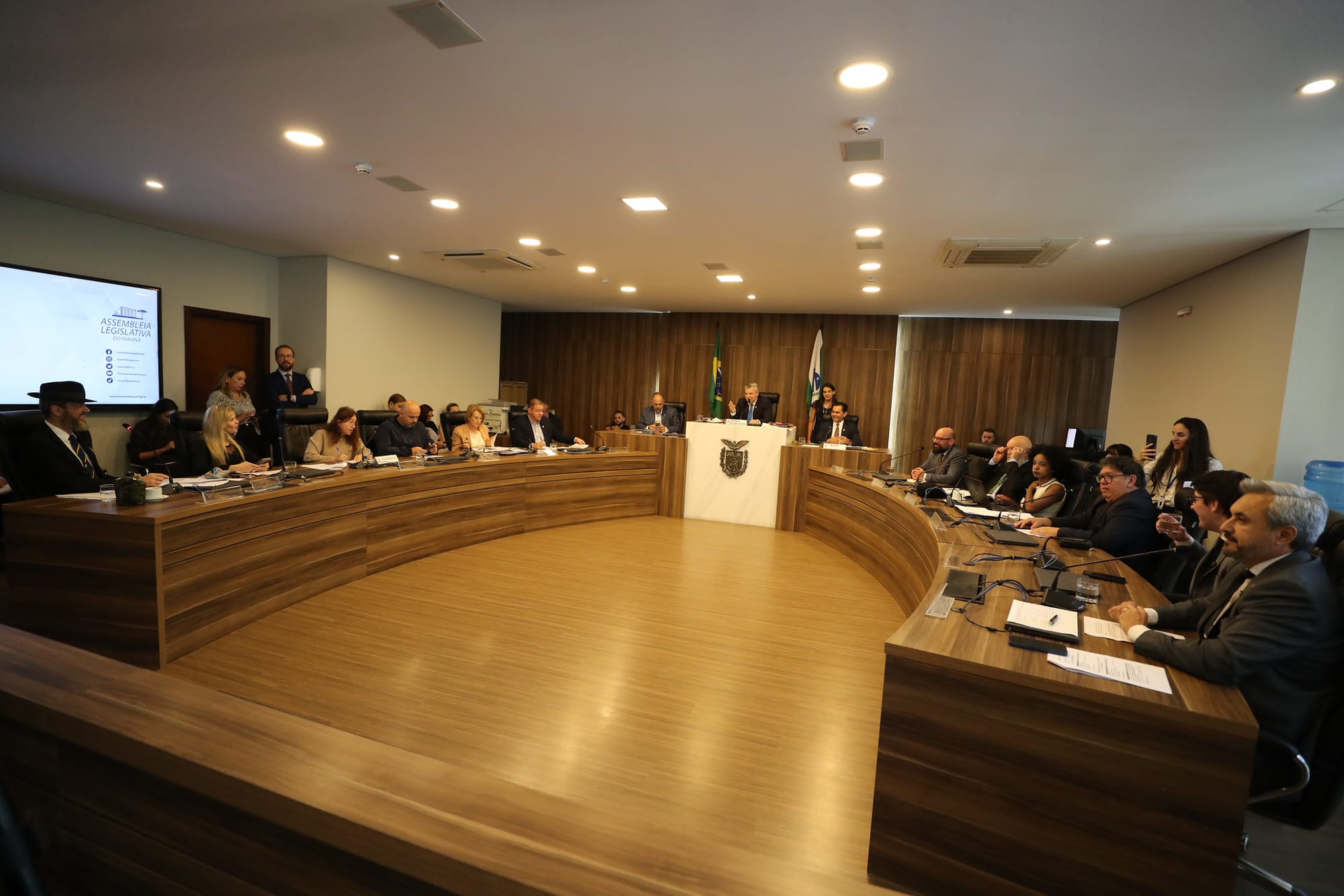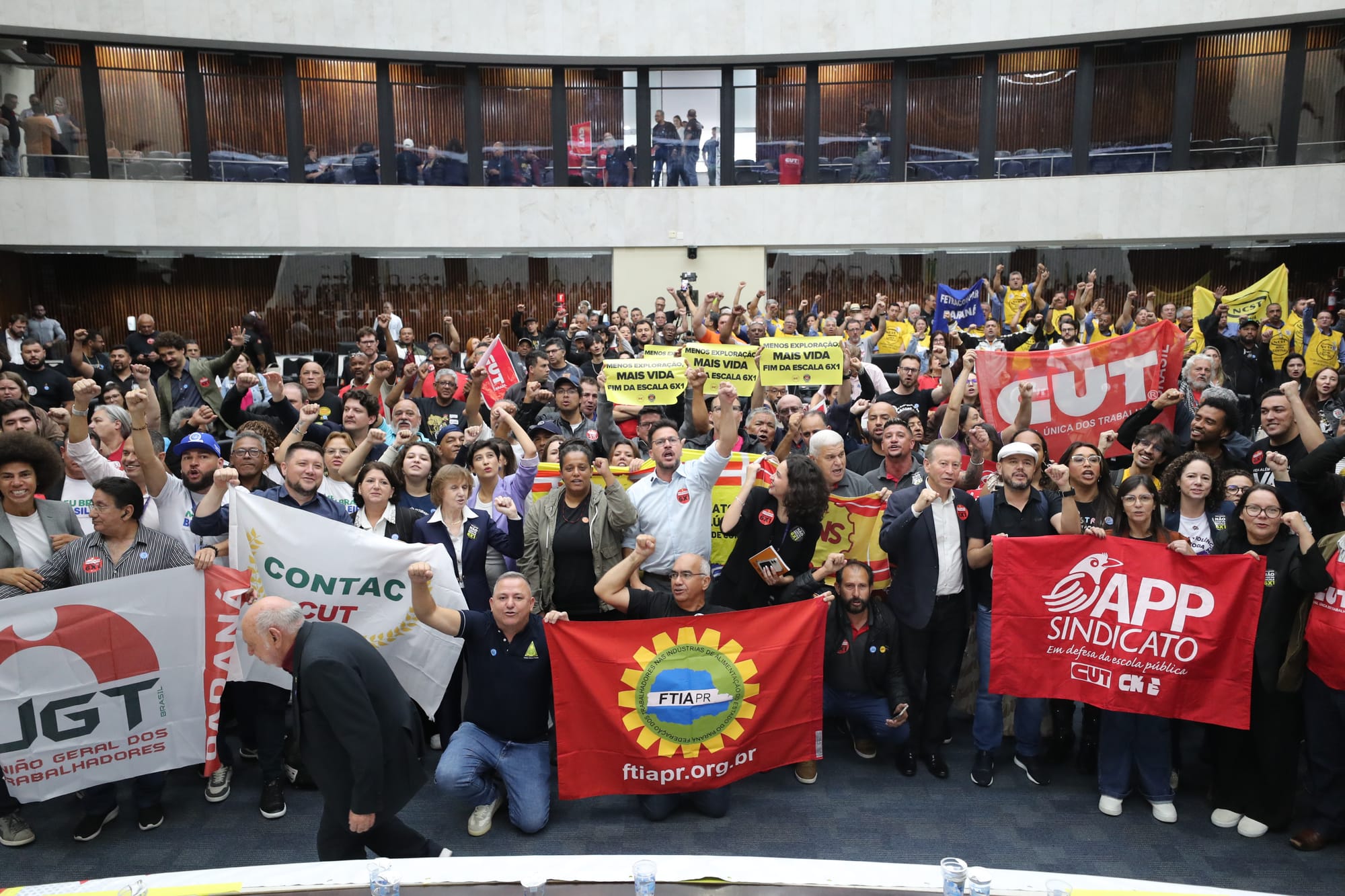
Debates over ending the 6x1 shift schedule and reducing the workweek from 44 to 40 hours took center stage at the Legislative Assembly of Paraná (Alep) this week, during a public hearing. The event brought together unions, lawmakers and workers from various sectors.
Although employer organizations commissioned studies on the economic impacts of reducing working hours, none participated in the hearing.
The hearing was an initiative of the Assembly’s Opposition Leadership. For state deputy and Opposition Leader Arilson Chiorato (PT), the agenda has a direct impact on the quality of life of the working population. “Work is a means to survive, not something to live for,” he said.
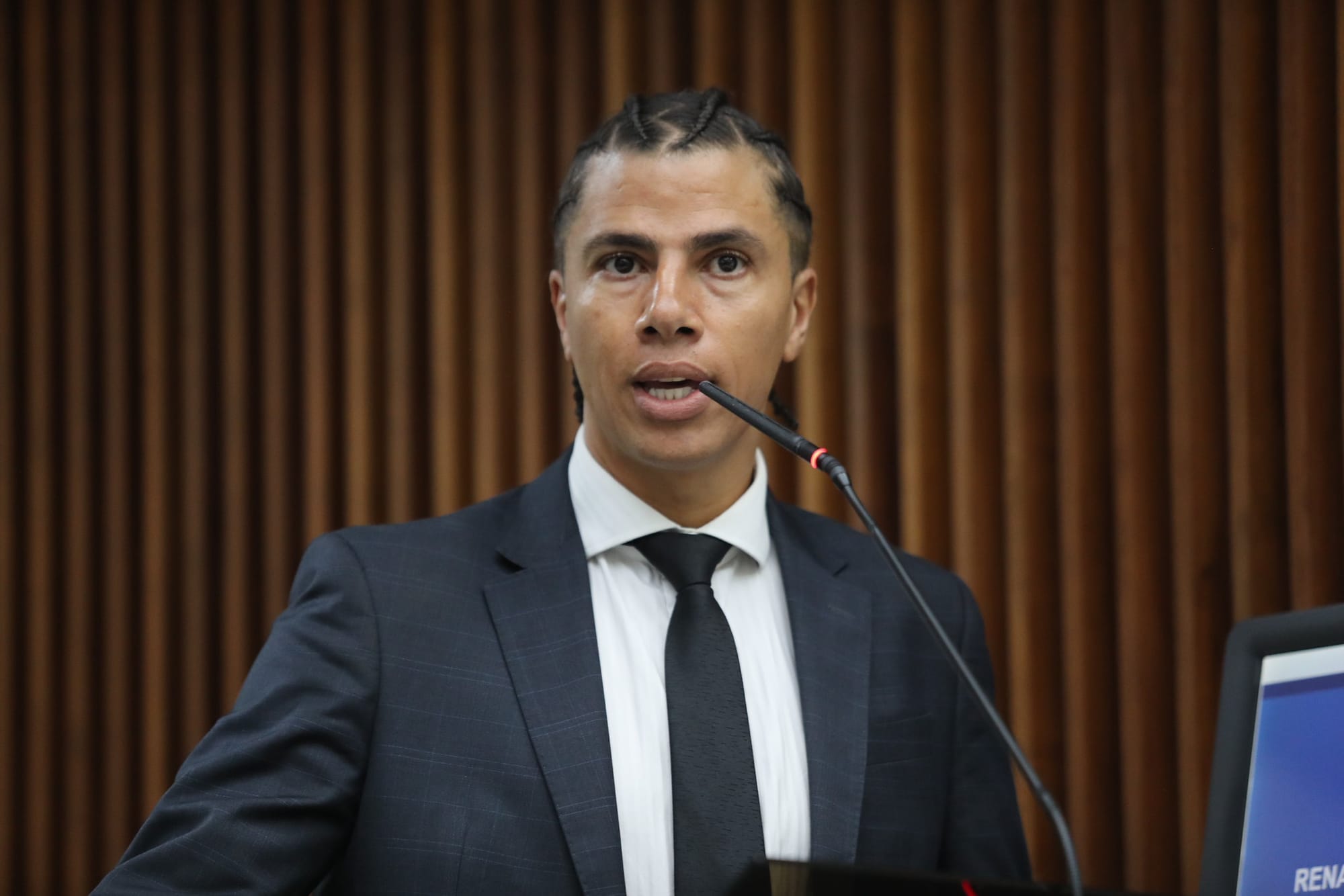
Also at the event were state deputies Requião Filho (PDT), Luciana Rafagnin (PT), Renato Freitas (PT), Dr. Antenor (PT), Professor Lemos (PT), Luiz Claudio Romanelli (PSD) and Lenir de Assis (PT).
 José Marcos Lopes
Representatives of the Central Única dos Trabalhadores (CUT), the International Union of Food and Agriculture Workers (UITA), the Unified Federation of Oil Workers and unions also accompanied the discussions.
Sidnei Machado, a labor law professor at UFPR, emphasized that the discussion on reducing working hours, currently on the agenda in the National Congress, is a central issue for the country and needs to be expanded in the states as well. “The debate on reducing working hours is central in Brazil. It is an old issue, but it has now returned with force and needs to be discussed in the regions too, listening to workers and their realities,” he said.
“Labor Justice and Labor Law in Brazil are crying out for help. We have gone through a phase of an ideological tsunami, of ultraconservatism in the discourse surrounding social issues. We need to move forward, and the agenda to end the 6x1 schedule is a gigantic step. We must prevent ‘Argentinization,’ like what happened to our neighbor,” said Celio Waldraff, interim president of TRT-PR (Regional Labor Court of Paraná).
Fabrício Gomes de Oliveira, a representative of the Labor Prosecutor’s Office, stressed that the institution supports the change. “They are human beings, not economic beings. Reducing working hours is a concept of civility. Working hours are a health issue. Those who are more tired have more accidents and get sick more,” he noted.
*with Alep