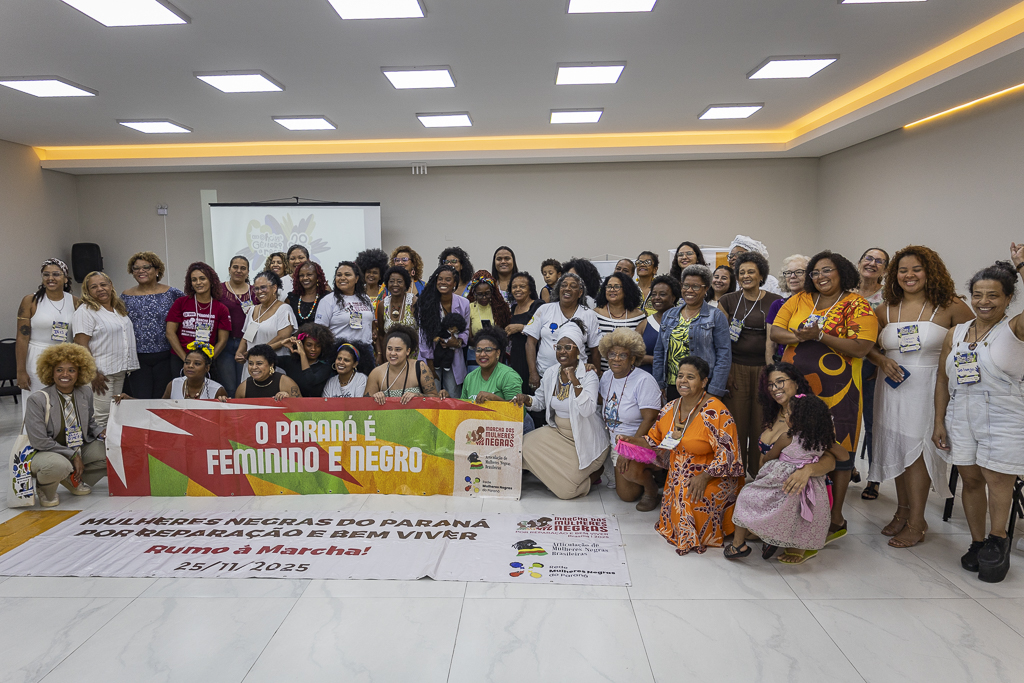
In the early 2000s, Alaerte Martins walked through meeting rooms on public policies in the health sector as the only Black woman present. "I was always the only Black face, so I needed to create the foundation so that there would be more Black women in all spaces for public policy discussion," she recalls. Thus, from discussions on racism, gender, and actions previously considered isolated, and with Alaerte as one of the founders, on February 5, 2006, the Black Women’s Network of Paraná (RMN-PR) was born, autonomous, non-profit, bringing together activists from across the state in health, education, culture, human rights, and income. Two decades later, it answers its original questions: who are we, what do we want, where are we going?
From half a dozen to a national presence
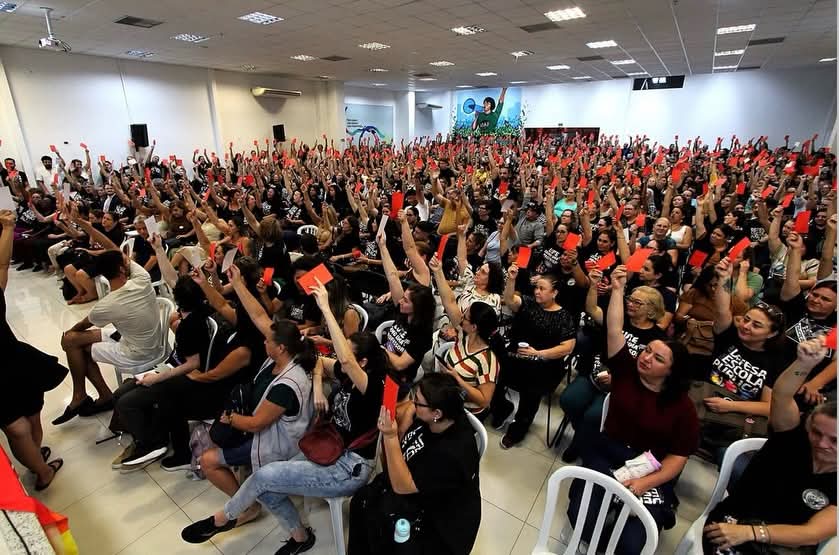
It all began with half a dozen women from unions and collectives, coordinating isolated actions after the Law 10.639/2003. "At the founding, there were few of us thinking about the network; today we are more than 50 or 60, and I’m thrilled about that," the founder celebrates. The Gender and Race Workshop, held annually since then and which in 2026 was held on January 29 and February 2, 6, and 7, became the backbone: it develops leadership and promotes essential gatherings and debates. “Each one present here [in the workshop] is a leader in her territories,” highlights Cleci Martins, the Network’s executive coordinator.
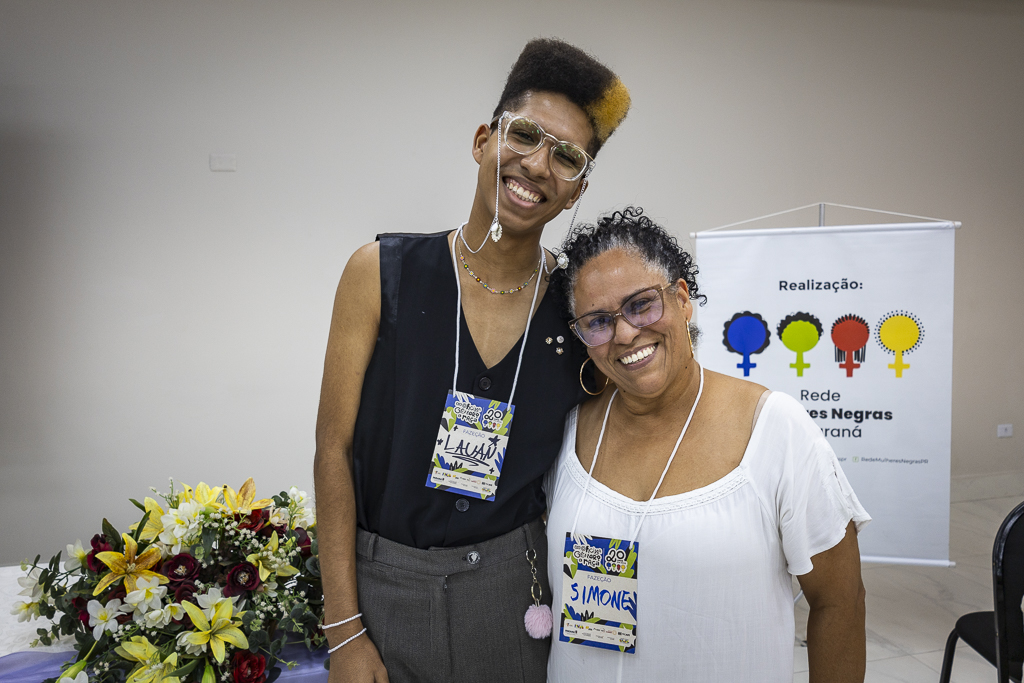
Another member, Simone Pereira, joined in 2007 as the team’s accountant, newly laid off after maternity leave. "Before, we fought alone, and the Network rescued my self-esteem, opened professional and social doors. Today my daughter is an associate and my son provides services," she says. Covert racism was an initial barrier, as she points out: "There’s a fear of Black women becoming stronger; we’re seen as a threat when we stop being subjugated.”
Occupying power: “what we want”
The Network’s mission is clear: "Our great goal is to have more Black women in spaces of power, like our first Black federal representative, Carol Dartora," the founder states. The pioneering representative was present at the Network’s 20th-anniversary celebration and embodies resilience: "It hurts to be the only one in the room; no one understands racist complaints in meetings with white engineers. My goal is pragmatic: power and money for Black women.”
For the participants, the 2015 Black Women’s March is one of the main achievements. Organized by activist Nilma Bentes and held on November 18 in Brasília, it brought together and connected RMN-PR with more than 100,000 women from all over Brazil against racism, violence, and in defense of good living. The idealizer participated in person in the celebration of the Network’s 20 years. “I believe that Nilma’s very presence here shows the respect we have from organizations at the national level,” emphasizes the founder Alaerte.
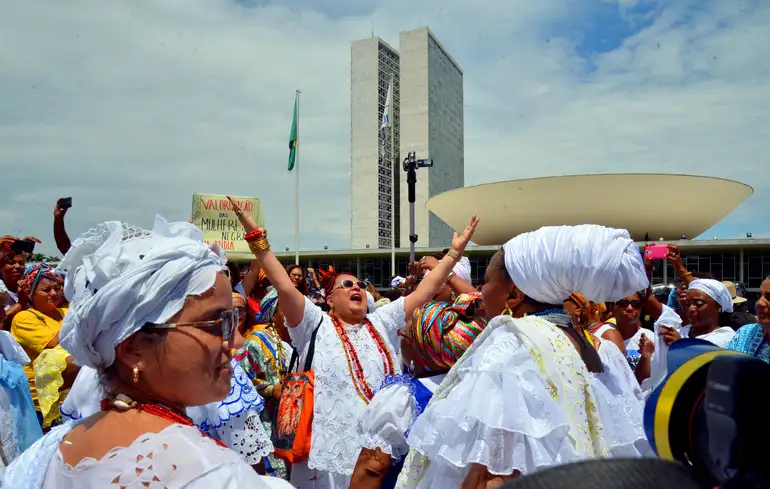
Birthing activism and collectivity: “who we are”
"The Network birthing new militants, activists, and health educators for political construction and for them to see themselves as subjects," defines Camila Matos, sociologist and deputy coordinator of the RMN-PR. Since 2006, the annual Gender and Race Workshop has trained Black women, supporting them as leaders who press for and implement public policies. For the sociologist, the process of “birthing” activists is constant and cyclical, since every Black woman present there had her identity and strength “birthed” by another Black woman. “The work of the Network is to strengthen women so that we can act in spaces representing both the construction of policy and also so that we can see ourselves as political subjects, not only at the center of actions, but by going there and doing,” she concludes.
The celebration was also a space of encouragement and identification, not only of struggles, but also of achievements. "Continuity is good living, reparation, and the representative brought that, birthing activists like me, admitted to a master’s program through quotas," Camila adds. She is one example of this “cycle of births”; the focus of her master’s research is in the line of Diversity, Difference, and Social Inequality that converges on the representation of Black bodies.
Horizon for the next 20 years: “where are we going”
“Our struggle is for life,” sums up the founder. The dreams are not only ambitious; they are part of the ongoing fight lived by all the participants. Alaerte acknowledges the adversities: “The size of our challenge for the Black people of the state of Paraná is still enormous. People are still not mobilized. Unfortunately, the Network is still today the only organization of the state Black movement,” but she hopes not only that the Network remains active, but that it will have more and more alliances and members. Simone hopes to see even more girls and women present. Carol Dartora wishes: "Black women represented, without hearing 'she’s not capable' because of appearance." "Building happiness is a political affirmation," summarizes Cleci. Camila argues that this year’s elections are a decisive event not only for the continuity of the Network, but for the expansion of affirmative policies in Brazil.